This customary historical sword functions as a remarkable work of art, but consider if you desire to communicate your individual character? Customizing your cutting tool is a fulfilling journey, allowing you to design a truly matchless piece. From the hilt wrapping and sheath to the handpiece design and marking, each component offers a chance for unique expression. This analysis delves into the area of katana customizations, providing tips for both newcomers and expert enthusiasts desiring to set their trace on the ancient art of the samurai.
Novice's Certified Craftsmanship
For enthusiasts ready to embark on the rewarding journey of katana handling skills , 1060 steel katanas present an ideal entry point. This defined grade of essential steel strikes a nice compromise between value and proficiency. While never as hard as upper-echelon steels, 1060 facilitates a moderate level of sharpening , making it appropriate for learners to acquire the foundations of blade preservation and appreciate the elegance of handcrafted Japanese weaponry. It’s a excellent choice for acquiring experience without the capital burden of more elite steels.
T Ten Alloy Weapons : Optimizing Excellence and Reasonableness
Satisfying specialists seeking an authentic cutting instrument experience without crossing the financial plan, T10 composition katanas represent a advantageous option. These cutlery offer a considerable improvement in robustness compared to basic alternatives, exhibiting good edge retention and adequate flexibility for basic incising techniques. While not rivaling the exquisite characteristics of ultimate steels like T100 or folded substance , T10 provides a distinguished blend of utility and price , making them a common choice for beginners and those on a modest resources .
Overcoming the Sword : Personalizing Your Katana's Enhancements and Shaft
Despite the honed sharpened metal is undeniably the key point of a katana, truly amplifying its presence lies in the exact customization of its details and hilt . This practice allows owners to communicate their personal character. Contemplate the wide possibilities: menuki - decorative trinkets that provide visual allure ; the hamon shields – often artistically sculpted ; the tsuka body itself, wrapped in orthodox ito yarn; and the fusa cap, which can be created from various substances like treasures or antler .
- Prefer concepts that resonate with you.
- Explore with different composites .
- Focus on merit for a long-term result .
The Love of the Katana: Antiquity, Formation, and Composition
A oriental cutlery holds a singular allure, steeped in times of Nippon's history and legacy . More than merely a contraption of battle , it's a token of the fighter class ethos – a fusion of artistry and governance . Its expansion spanned numerous generations, with early edges evolving into the sleek-lined curvature and deadly edge we know today. The workmanship involved is truly impressive , requiring years of study to excel at . The process involves a sophisticated folding of tamahagane , creating layers that strengthen the weapon’s flexibility and shaving ability. Various schools of metalworking started , each with their distinctive secrets and formulas for achieving the ideal equilibrium and edge - a truly strenuous pursuit.
- First Katana classes
- The importance of the traditional blade in samurai culture
- Ancient metalworking techniques
Choosing the Optimal Steel for Your Sword Project Project: 1060 vs. T10
Electing the appropriate steel is decisively important for any weapon project, and the resolution between 1060 and T10 can be delicate. 1060 is a well-known American composition, offering a solid balance of robustness and endurance, supplying it reasonably easy to forge. However, T10, a Oriental steel, ordinarily boasts heightened wear sustainability and can likely achieve a increased conclusive hardness, although it can be considerably troublesome to handle and requires precise heat refinement. Consider your qualification and expected benefits: for a first-timer, 1060 may be a easier starting point, while the master smith might admire the augmented features of T10.
- Convenience of Working
- Longevity
- Terminal Tenacity
Achieving Mastery: Complex Katana Adjustment Techniques
Advancing competence in blade refinement extends far beyond basic buffing. Serious enthusiasts are now researching advanced techniques to truly unleash a blade's hidden potential. This includes intricate work with the temper rim, utilizing specialized ingredients for differential tempering and carefully opting for the contour of the hand guard to optimize balance and functionality. Beyond purely functional changes, artisans are increasingly focused on achieving unparalleled aesthetic elegance, through complex engraving and layered glazes that truly transform a katana into a showpiece.
Turning Raw Material into Excellence: Creating a 1060 Katana
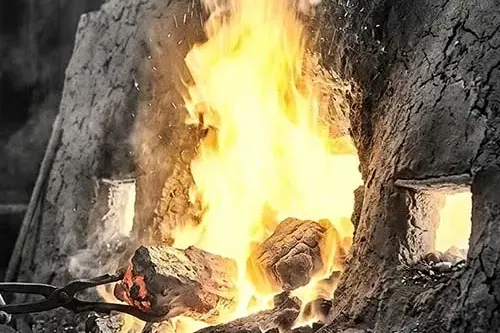
The journey begins with regular 1060 metal , a strong material far away the deluxe katana it will transform . Proficient bladesmiths utilize a sophisticated process of layering and hammering the raw steel, repeatedly burning it and flattening it to discard impurities and build a even grain structure. This tiring process, often extending for spans , builds the vital hardness and flexibility characteristic of a real Japanese cutlery . Further heat procedures tanto , including methodical hardening and annealing , are essential to achieve the aimed balance of sharpness, endurance and loveliness .- Uniting: Eliminates impurities and produces grain structure.
- Fabricating: Shapes the steel into the initial blade form.
- Annealing: Establishes the final hardness and flexibility.
The Perpetual Attraction of the Katana: Extensive Study of Steel and Alteration
That long-standing katana remains a striking symbol representing Japanese civilization , its magnetism far beating mere artillery . Forged from tamahagane steel and frequently featuring intricate embellishments , the practice of creation itself is a esteemed art. Beyond the essential craftsmanship, the ability to reshape a katana - from the patterning to the grasp wrapping and habaki - allows for a genuinely individual statement for both admirers and wielders alike. This fusion of time-honored steelwork and boundless personalization produces the katana's continued fame across the earth .
