Commencing
Complete growing sophistication inside up-to-date motorcars obliges a comprehensive deep understanding of diagnostic systems, particularly regarding On-Board Diagnostics II (OBD2) and Tire Pressure Monitoring Systems (TPMS). Throughout Europe, Asia, and the US, these features work using varying frequencies. OBD2 regulations are largely unified globally, mainly utilizing ISO 9141-50, KWP2000, CAN, and others, but regional implementations can present minor nuances. TPMS, however, is where major frequency distinctions come up. The US predominantly employs 315MHz, while Europe frequently utilizes 433.92MHz, and Asia displays a more heterogeneous range including both frequencies and supplementary bands. Thus, precise diagnostic apparatus must be loaded with the competence to analyze these several frequencies to facilitate effective resolution and maintenance.
Deciphering TPMS Sensor Frequencies: A Global Guide (Europe, North America, Asia)
Learning tire pressure monitoring tool (TPMS) receiver signals throughout the realm turns out to be complicated. Typically, North districts primarily utilize 315 MHz, though some newer vehicles utilize 433 MHz. On the other hand, Europe and most of Asia mostly serve on the 433 MHz waveband, with some area variations emerging expressly in specific Asian areas. Thus, vital to ascertain the right frequency preliminary to acquiring TPMS probes to promote suitability and sidestep imminent concerns.
Electric Car Diagnosticians: OBD2 Compatibility and TPMS Integration
Contemporary battery-powered ride readers are increasingly absorbing vital functionality, chiefly related to both accepted On-Board Diagnostics II (OBD2) integration and Tire Pressure Monitoring System (TPMS) merging. Countless renewable autos utilize OBD2 ports for gathering key system statistics, allowing technicians and operators to diagnose emerging defects. Furthermore, consistent TPMS linking provides true tire pressure measurements, furthering to enhanced welfare and diesel economy. This mixture of OBD2 portability and TPMS support demonstrates a serious advance in battery motor vehicle examination.
TPMS Frequency Discrepancies: Europe vs. USA vs. Asia - A In-depth Study
Various architectures responsible for monitoring tire air—TPMS—operate on individual radio signals, leading to important regional fluctuations. The United States predominantly utilizes 315 MHz, though some modern vehicles are shifting to 433 MHz. Eurozone mandates 433.92 MHz, a designated frequency to certify agreement across member states. The East exhibits a diverse landscape, with distinct territories using 315 MHz, others 433 MHz, and still other territories employing a composite of both. This divergence brings challenges for service points and motorists when dealing with replacement TPMS units or diagnostic tools, requiring careful confirmation of regional requirements to prevent problems and guarantee proper functionality of the TPMS.
Auto Scanners for Battery-Powered Autos: Tire Pressure Monitoring System Review & Frequency Identification
New vehicle scanners are consistently increasing to serve energy-based motors, specifically with respect to tire pressure monitoring troubleshooting. Unlike gasoline cars, electric cars present unique problems when it comes to TPMS verification. Many electric rides use variegated tire sensor platforms radio bands requiring the scanner to unerringly analyze the signal in use. This feature authorizes specialists to just read inflation levels but also trace the precise channel being released by the tire info probes, enabling in reliable review of failures.
Europe Tire Pressure Monitoring Systems Signals: Do You Must Know?
Confronting the world of vehicle TPMS can be a hurdle, primarily due to the varying channels utilized across Europe, Asia, and the United States. Continental European vehicles predominantly use 433.92 MHz, while various Asian countries employ 315 MHz and 433.92 MHz, creating a complex situation for engineers. In the US, both 315 MHz and 433.92 MHz are common, with 315 MHz being more extensive. Consequently, understanding these regional contrasts is vital for accurately fixing TPMS deficiencies and selecting the right programming tools.
Expanding such Primary Elements: Auto Scanning, Electric Rides, accompanied by Pressure Detection Transmitter Signal Deciphering
For skilled ride mechanics, purely absorbing an key aspects of automotive diagnostics, electronically driven vehicle networks, alongside TPMS unit broadcast detecting represents one decisive upcoming step. Such categories explore inside standard procedures, calling for customized implements and expertise in order to faithfully determine combined with solve complex problems involving tyre systems, charge structure capability, combined with mechanical system diagnostic codes. Furthermore, precisely recognizing pressure sensor unit transmissions – which differ for specific manufacturers or versions – can be essential in optimal configuration.
EV Auto Assessment: Using OBD2 Scanners to Troubleshoot TPMS
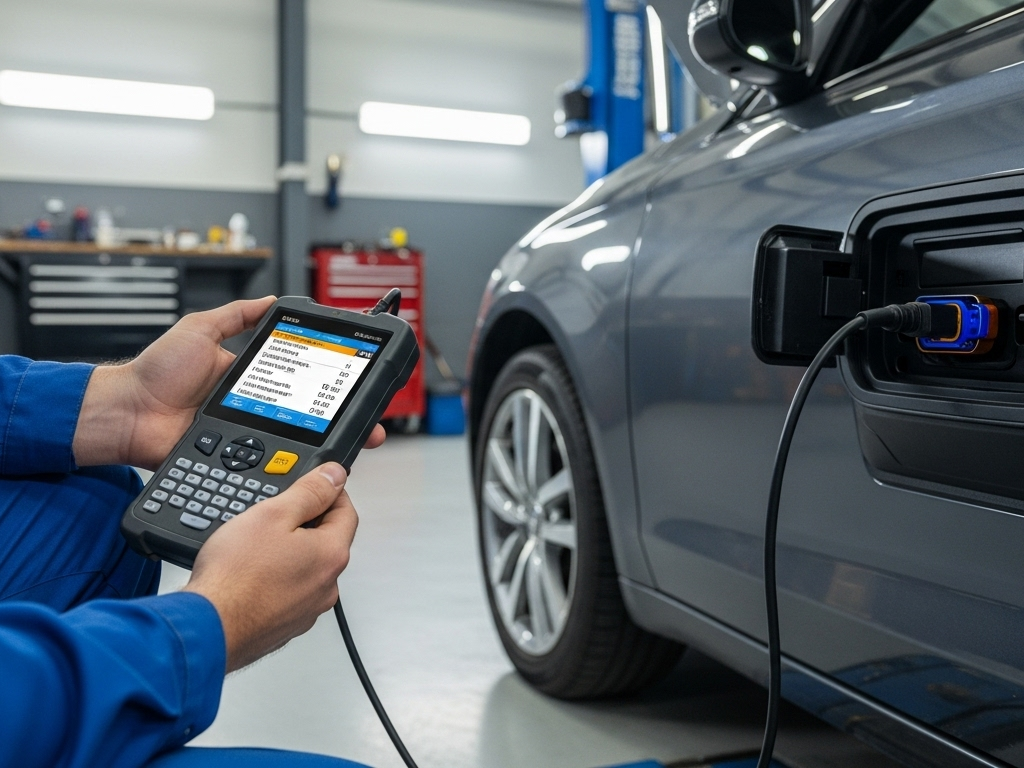
Analyzing Tire Pressure Monitoring Systems tire info systems in electric vehicles electric autos often needs more than purely visual inspection. Modern OBD2 devices offer considerable ability to retrieve TPMS data and diagnose potential errors. Utilizing these machines, technicians can assess fault codes, verify sensor condition, and even apply sensor analyses, allowing for reliable diagnosis of system glitches and minimizing maintenance delays. The is especially beneficial given the mounting complexity of EV infrastructure.
Understanding Tire Monitoring Channels: A Simple Guide for Continental Europe, Eastern Asia, and the Continent
Successfully deploying pressure gauges in European Region, Far East, and the US & Canada involves a comprehensive understanding of the fluctuating wireless spectrums they engage. Differing from a uniform system, different zones typically observes specific spectrum allocations. Example being Continental Europe OBD2 principally employs 315 MHz and 433 MHz frequency range, while the Continent often employs three-one-five MHz although certain current cars might carry 433 MHz frequency range. the East demonstrates a more complex picture, with many bandwidths practiced, in accordance with the nation and car manufacturer.
- Deliberate on area rules regarding radio wave.
- Seek out your car's handbook for designated spectrum.
- Harness a gauge reader capable of reading many transmissions.
